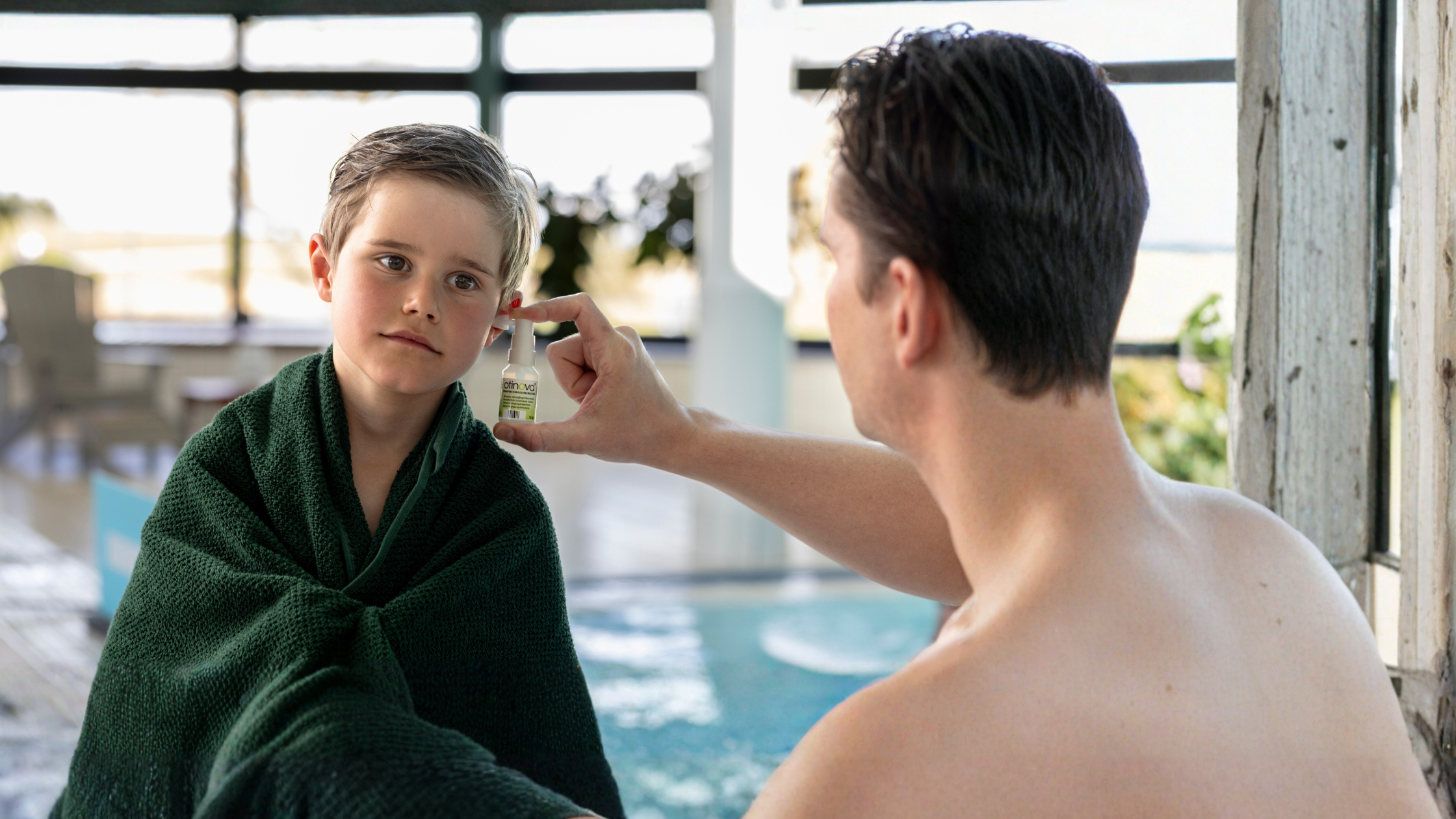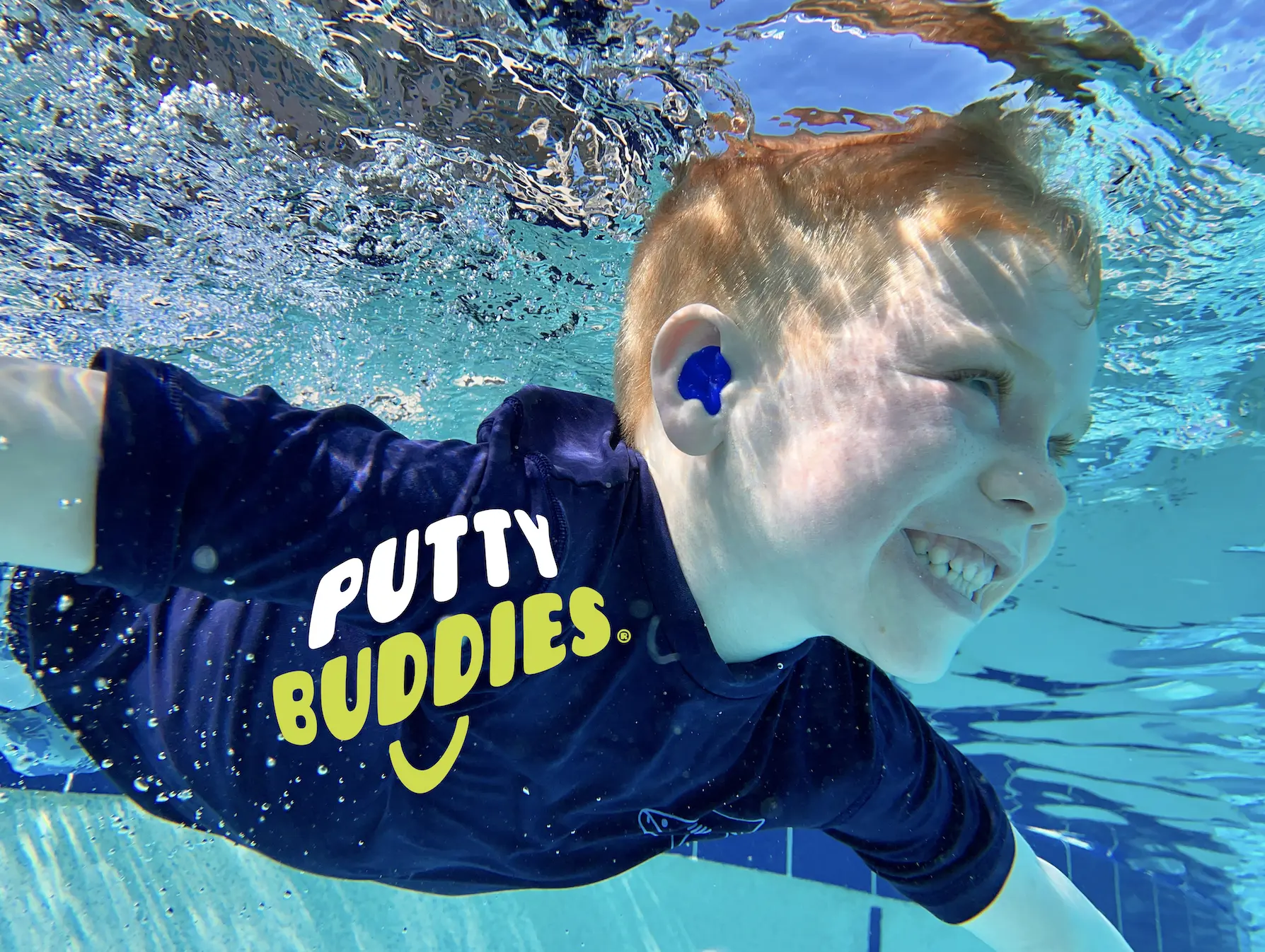
As a parent, it’s useful to know that although swimmer’s ear can be painful, it’s fortunately usually easy to treat. Although not every child will immediately tell you that they have an earache, as a parent you can sometimes tell by their behaviour or movements.
You might notice them touching their ear a lot, or that they prefer not to lie on one side, or indeed not to lie down at all. This is because lying down puts more pressure on the ears, which can cause pain.
These are symptoms that may indicate swimmer’s ear or an ear canal infection. This is something that can easily be diagnosed by your doctor.
Treating swimmer’s ear starts with good ear care. Most importantly, make sure you always dry your child’s ears thoroughly after swimming or bathing.
The safest and most effective method is to use a single sheet of tissue. Fold this around your little finger and let the thin paper absorb the moisture from the ear canal. Gently move your little finger up and down while tilting your head so that gravity helps the water drain away. Repeat this until the tissue remains dry.
This may take a few minutes. Avoid using cotton buds or sharp objects, as these can irritate the ear canal.
It is important that your child is first assessed by a doctor before looking at remedies available at the chemist’s. The doctor can advise on which treatment is suitable for your child’s age and whether a product can be used safely if your child is younger than the age stated on the packaging.
This way, you minimise the risk of swimmer’s ear and keep your little water-lover pain-free.